


liNeonghts vs. neon Ltrips: ED sA closer look at the differences
2025-04-28
liNeonghts vs. neon Ltrips: ED sA closer look at the differences
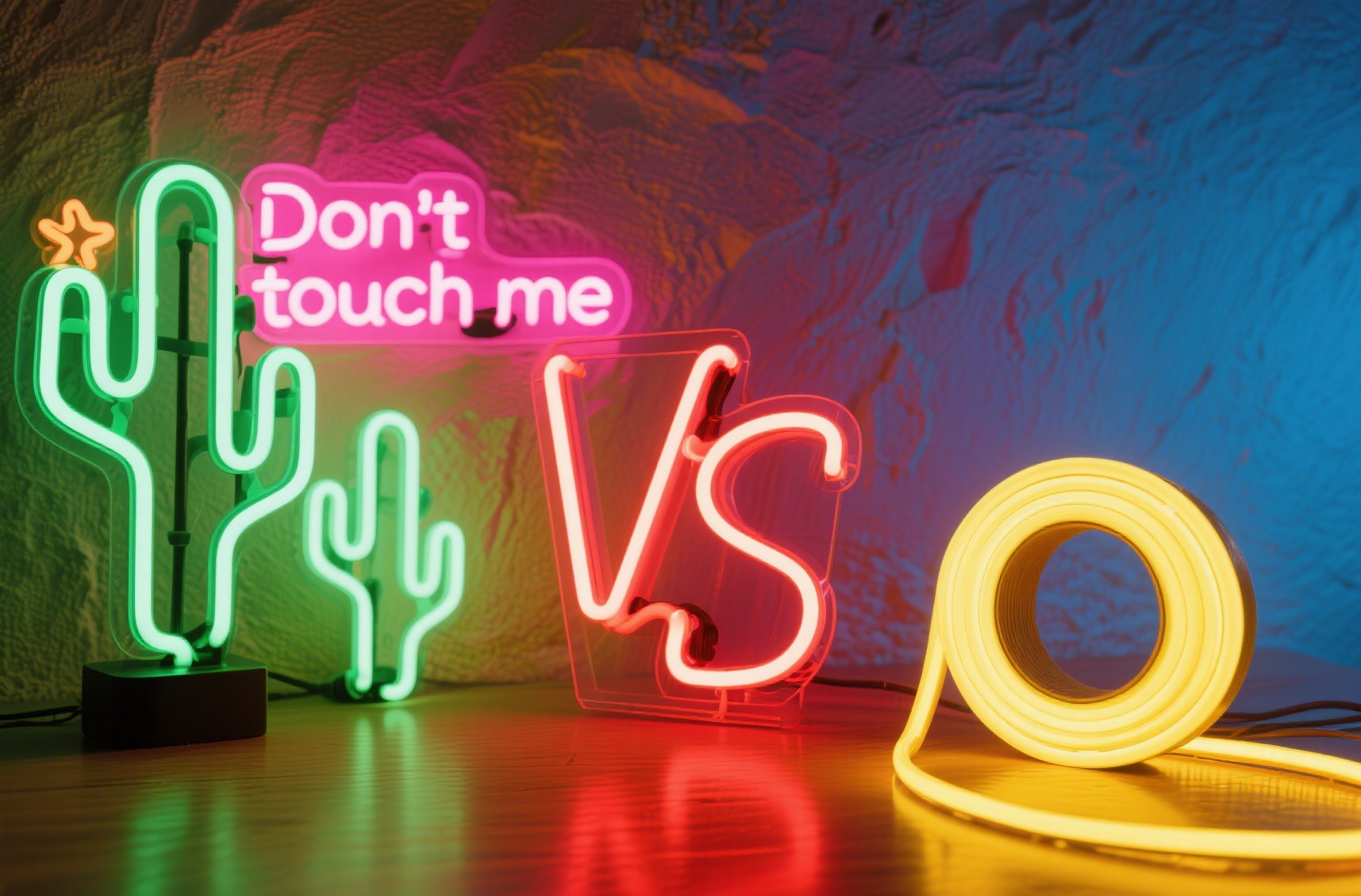
In the world of lighting, few forms are as eye-catching as neon. From the brightly colored signs of old-school restaurants to the sleek, sleek designs of contemporary spaces, neon lighting has come a long way. Two popular contenders in this space are traditional neon lights and LED neon strips. While they have similar names and more appealing visuals, they are very different in many ways.
1. Technology and construction
Traditional neon lights
Traditional neon lights have a long history, dating back to the early 20th century. They consist of long, thin glass tubes filled with an inert gas, such as neon, argon, or a mixture of gases. The magical effect occurs when high voltage is applied to electrodes at both ends of the tube. The voltage causes the gas to ionize and emit light. The color of the light depends on the type of gas used; for example, pure neon emits a bright red color, while argon and mercury vapor emit a bluish-purple color. The glass tubes need to be bent by hand by skilled craftsmen to form the desired shapes and patterns, which is a time-consuming and delicate process.
Neon Strip
Neon LED strips are a more modern innovation. They are based on light-emitting diode (LED) technology. These strips consist of a flexible circuit board with multiple LED chips mounted on it. The LED chips are covered in a protective casing, usually a translucent or diffuse silicone or plastic casing, which gives them a neon-like appearance. The casing can be made in a variety of colors or can be transparent so that the color of the LED itself can show through. Unlike traditional neon lights, the shapes of neon LED strips are not limited by hand-bent glass; they are inherently flexible and can be easily bent, wrapped around objects or cut to specific lengths.
2. Energy efficiency
One of the most notable differences between the two is in energy consumption. Traditional neon lights are relatively power hungry. Because high voltage is required to ionize the gas and maintain the glow, traditional neon lights use more electricity than modern lighting.
Neon LED strips are based on LED technology and are energy efficient. LEDs are known for their low power consumption and high light efficiency. Neon LED strips of similar size to traditional neon lights may consume only a fraction of the power, typically just tens of watts. This energy saving not only saves on electricity bills, but also makes them a more environmentally friendly choice because they reduce energy waste and greenhouse gas emissions associated with power generation.
Neon LED strips are based on LED technology and are energy efficient. LEDs are known for their low power consumption and high light efficiency. Neon LED strips of similar size to traditional neon lights may consume only a fraction of the power, typically just tens of watts. This energy saving not only saves on electricity bills, but also makes them a more environmentally friendly choice because they reduce energy waste and greenhouse gas emissions associated with power generation.

3. Durability and maintenance
Traditional neon lights have some drawbacks in terms of durability. The glass tube is fragile and can easily break if mishandled or subjected to physical impact. In addition, the electrodes at the end of the tube will wear out over time, and the gas inside the tube will slowly leak out, affecting the light output. Maintenance of traditional neon lights usually requires professional technicians to repair or replace the glass tube and electrodes, which is both expensive and time-consuming.
Neon LED strips, on the other hand, are much more durable. A flexible housing protects the LED chips from physical damage, and the LEDs have a very long lifespan, often 50,000 hours or more. They are also more resistant to vibration and shock, making them suitable for a wider range of applications, including in moving vehicles or high-traffic areas. Neon LED strips are very low maintenance; in most cases, if a section fails, it can be easily replaced without replacing the entire strip, and there are no delicate glass tubes or gas-filled parts to worry about.
Neon LED strips, on the other hand, are much more durable. A flexible housing protects the LED chips from physical damage, and the LEDs have a very long lifespan, often 50,000 hours or more. They are also more resistant to vibration and shock, making them suitable for a wider range of applications, including in moving vehicles or high-traffic areas. Neon LED strips are very low maintenance; in most cases, if a section fails, it can be easily replaced without replacing the entire strip, and there are no delicate glass tubes or gas-filled parts to worry about.
4. Color and design options
Both traditional neon and neon LED strips offer a variety of color options, but there are some differences in how the colors are achieved and design flexibility.
The color of traditional neon lights depends on the gas inside the tube and sometimes the phosphor coating on the inside of the glass tube. While a wide variety of colors are available, creating specific hues or complex color combinations can be more challenging. In addition, designs are limited by the ability to bend the glass tube by hand, which means that very tight curves or intricate details can be difficult or even impossible to achieve.
Neon LED strips, on the other hand, offer unparalleled color and design flexibility. LEDs can produce a wide range of colors, and many neon LED strips are available in RGB (red, green, blue) versions, which, through digital control, allow for nearly endless color combinations. This means you can create dynamic color changes, gradients, and even animations. The inherent flexibility of the strips makes them easy to install in tight spaces, around corners, and on complex shapes, making them ideal for creative and complex lighting designs both indoors and outdoors.
The color of traditional neon lights depends on the gas inside the tube and sometimes the phosphor coating on the inside of the glass tube. While a wide variety of colors are available, creating specific hues or complex color combinations can be more challenging. In addition, designs are limited by the ability to bend the glass tube by hand, which means that very tight curves or intricate details can be difficult or even impossible to achieve.
Neon LED strips, on the other hand, offer unparalleled color and design flexibility. LEDs can produce a wide range of colors, and many neon LED strips are available in RGB (red, green, blue) versions, which, through digital control, allow for nearly endless color combinations. This means you can create dynamic color changes, gradients, and even animations. The inherent flexibility of the strips makes them easy to install in tight spaces, around corners, and on complex shapes, making them ideal for creative and complex lighting designs both indoors and outdoors.
5. Cost
When it comes to cost, traditional neon signs tend to have higher upfront costs. The process of hand-bending the glass tubes, the use of inert gases, and specialized manufacturing processes all contribute to their higher initial price. Additionally, as mentioned earlier, maintenance costs can also increase over time due to the fragility of the components.
While neon LED strips may cost slightly more per foot than some basic LED strips, they are more cost-effective than traditional neon lights in the long run. Their lower energy consumption, longer lifespan, and minimal maintenance costs mean a significantly lower total cost of ownership. They are a more affordable option for those who want the look of neon signs without the high upfront and ongoing costs.
While neon LED strips may cost slightly more per foot than some basic LED strips, they are more cost-effective than traditional neon lights in the long run. Their lower energy consumption, longer lifespan, and minimal maintenance costs mean a significantly lower total cost of ownership. They are a more affordable option for those who want the look of neon signs without the high upfront and ongoing costs.


6. Application scenarios
Traditional neon lights
Traditional neon signs are often used for places that want a classic, vintage look. They are often seen on vintage shop signs, old-fashioned bars and restaurants, and as decorative elements in some art installations. They create bold, bright, and long-lasting signs that stand out from the crowd, making them a popular choice for businesses that want to evoke a sense of nostalgia or create a strong visual impact in a traditional way.
Neon Strip
Neon LED strips have a wider range of applications due to their flexibility, durability, and energy efficiency. They are widely used for accent lighting in interior design, such as along ceilings, around furniture, or to highlight architectural features. In outdoor applications, they can be used to outline buildings, storefront displays, and even for landscape lighting. They are suitable for both indoor and outdoor use, and can withstand various weather conditions (when properly sealed), making them a very versatile choice. They are also widely used in indoor and outdoor lighting in the automotive industry, as well as stage and event lighting in the entertainment industry due to their dynamic color capabilities.
In summary, while both traditional neon lights and LED neon strips offer the same neon-like appeal, they differ significantly in technology, energy efficiency, durability, design options, cost, and applications. Traditional neon lights are a classic choice for those who value an authentic vintage look but are willing to invest more in initial costs and maintenance. LED neon strips, on the other hand, are a modern, energy-efficient, and versatile alternative that can be used in a variety of applications, from simple home decor to large commercial and architectural projects. Choosing between the two depends on your specific needs, aesthetic preferences, and budget, but one thing is for sure—both add a bright, attractive glow to any space.

 12V IP65 Neon Rope Light – Ideal Outdoor LED Strip for Ramadan & Mosque Lighting
  Home Light Strip Selection Guide
  Goodchip Overall Layout in UV LED Market
 - New Upgrading to Eyelove Healthy Lighting LED!
- Goodchip Publishing High Light Efficiency Plant Lighting LED
- Life Of LED Packaging March.
 injection led modules.
 - The latest trends in the LED industry