


Home Light Strip Selection Guide
2025-05-09

Ultimate Guide to Choosing the Perfect Home LED Strip Lights
Are you looking to transform your living space with elegant, functional lighting? LED strip lights have become a popular choice for homeowners worldwide, offering versatility, energy efficiency, and customizable ambiance. But with countless options on the market, how do you select the right ones for your home? This comprehensive guide, backed by industry research , will walk you through the key factors to consider, ensuring you make an informed decision.
1. Assess Your Lighting Requirements: Balancing Functionality and Aesthetics
Prior to examining product specifications, it is essential to clearly define the intended purpose of your LED strip lights. Are you seeking to:
- Illuminate workspaces such as kitchen counters or home offices?
- Establish mood-enhancing lighting for living rooms or bedrooms?
- Highlight architectural elements like bookshelves or staircases?
- Improve safety through under-cabinet or pathway illumination?
According to a 2024 report by the Illuminating Engineering Society (IES), identifying specific usage scenarios facilitates the selection of appropriate technical requirements, including brightness, color temperature, and durability. For instance, task lighting in kitchens generally demands 300-500 lumens per foot, whereas ambient lighting for bedrooms may only require 100-200 lumens.
2. Key Technical Specifications to Evaluate
Brightness & Lumen Output
Lumens measure a light's total output. Higher lumens mean brighter light, but remember: more isn't always better. A study by Energy Star (2024) found that most residential applications thrive with 50-200 lumens per linear foot. For accent lighting, opt for lower lumen strips (50-100), while task areas like kitchen islands benefit from 150-200 lumens.
Color Temperature: Set the Right Mood
Color temperature, measured in Kelvins (K), drastically affects ambiance:
Warm White (2700K-3000K): Emulates incandescent lighting, perfect for cozy bedrooms and living rooms.
Neutral White (4000K-4500K): Balances warmth and clarity, ideal for kitchens and bathrooms.
Cool White (5000K-6500K): Mimics daylight, great for workspaces but avoid in bedrooms to prevent harshness.
A 2023 survey by Houzz revealed that 68% of homeowners prefer warm white tones for living areas, while 45% choose neutral white for kitchens.

LED Density:
Density refers to the number of LEDs per foot (e.g., 30 LEDs/ft vs. 60 LEDs/ft). Higher density (60+ LEDs) provides smoother, more uniform light—critical for visible installations like under-cabinet lighting. Lower density (30-40 LEDs) works well for hidden applications or when a softer glow is desired.
Energy Efficiency & Lifespan
Look for strips with a high lumen-per-watt ratio (ideally 50+ lm/W) to minimize energy costs. Most quality LED strips last 50,000-100,000 hours—That's over a decade of use at 3 hours/day! The U.S. Department of Energy (2024) notes that ENERGY STAR-certified LED strips offer 25% better efficiency than non-certified models.
3. Types of LED Strip Lights: Which Fits Your Home?
Monochrome Strips
Pros: Simple, affordable, perfect for consistent lighting (e.g., under-cabinet, stair lighting).
Cons: Limited color options—great for functional needs, less for creativity.
RGB (Red-Green-Blue) Strips
Pros: Create millions of colors and dynamic effects via controllers/apps. Ideal for entertainment areas, gaming rooms, or accent walls.
Cons: May lack true white light; some models have a "colorful" tint when set to white.
RGBW (Red-Green-Blue-White) Strips
The Best of Both Worlds: Combines RGB color options with a dedicated white LED for pure white light. Perfect for spaces needing both vibrant colors and accurate white illumination (e.g., living rooms, dining areas). A 2024 market report by LEDinside found RGBW strips growing in popularity, accounting for 35% of residential sales.
Waterproof vs. Non-Waterproof
IP20 (Non-Waterproof): Suitable for dry indoor spaces (bedrooms, living rooms).
IP65 (Water-Resistant): Protected against splashes—ideal for kitchens, bathrooms, or outdoor use (e.g., patio decks).
IP67/IP68 (Fully Submersible): For extreme environments like pools or fountains (rarely needed for most homes).

4. Installation & Compatibility Considerations
Strip Length & Cutability
Most strips are sold in 5-meter rolls and can be cut at specific intervals (usually every 3-6 LEDs). Measure your space carefully—a 10% longer strip is better than 10% too short! Some brands like Philips Hue and Sylvania offer custom-cutting services for unique installations.
Adhesive Quality & Mounting Options
Look for strips with 3M adhesive backing for secure placement, especially on smooth surfaces like cabinets or walls. For rough surfaces, consider clips or brackets—essential for long-term reliability. A Consumer Reports (2024) test showed that strips with premium adhesives lasted 2x longer than budget models in high-moisture areas.

Control Methods: Choose Your Convenience
Basic Remotes: Simple but limited in features.
Smart Controllers: Connect via Wi-Fi/Bluetooth for app control, voice integration (Alexa, Google Home), and advanced features like scheduling or music sync.
Dimmers: Adjust brightness levels—critical for ambient lighting zones.
Below I will recommend several well-known brands for you to choose from at different price points and needs.
Dimmers: Adjust brightness levels—critical for ambient lighting zones.
Philips Hue: Renowned for smart integration and color precision (starting at $30/meter).
LIFX: Offers high-lumen output and Wi-Fi connectivity without a hub ($25/meter).
Sylvania LED + Home: Affordable yet reliable, ideal for basic applications ($15/meter).
Test Before Full Installation!
Before committing to a permanent install, plug in a sample strip in your target area. Observe how the light interacts with your space's colors and textures—you might be surprised how a 3000K strip looks warmer than expected in a north-facing room!
Choosing the right LED strip lights boils down to understanding your needs, evaluating technical specs, and balancing quality with budget. Whether you're creating a cozy reading nook or a vibrant entertainment hub, the perfect strip is out there. Remember: a well-lit home not only looks better—it feels better too.
Reference Sources:
Illuminating Engineering Society (IES), 2024 Residential Lighting Guidelines.
 12V IP65 Neon Rope Light – Ideal Outdoor LED Strip for Ramadan & Mosque Lighting
 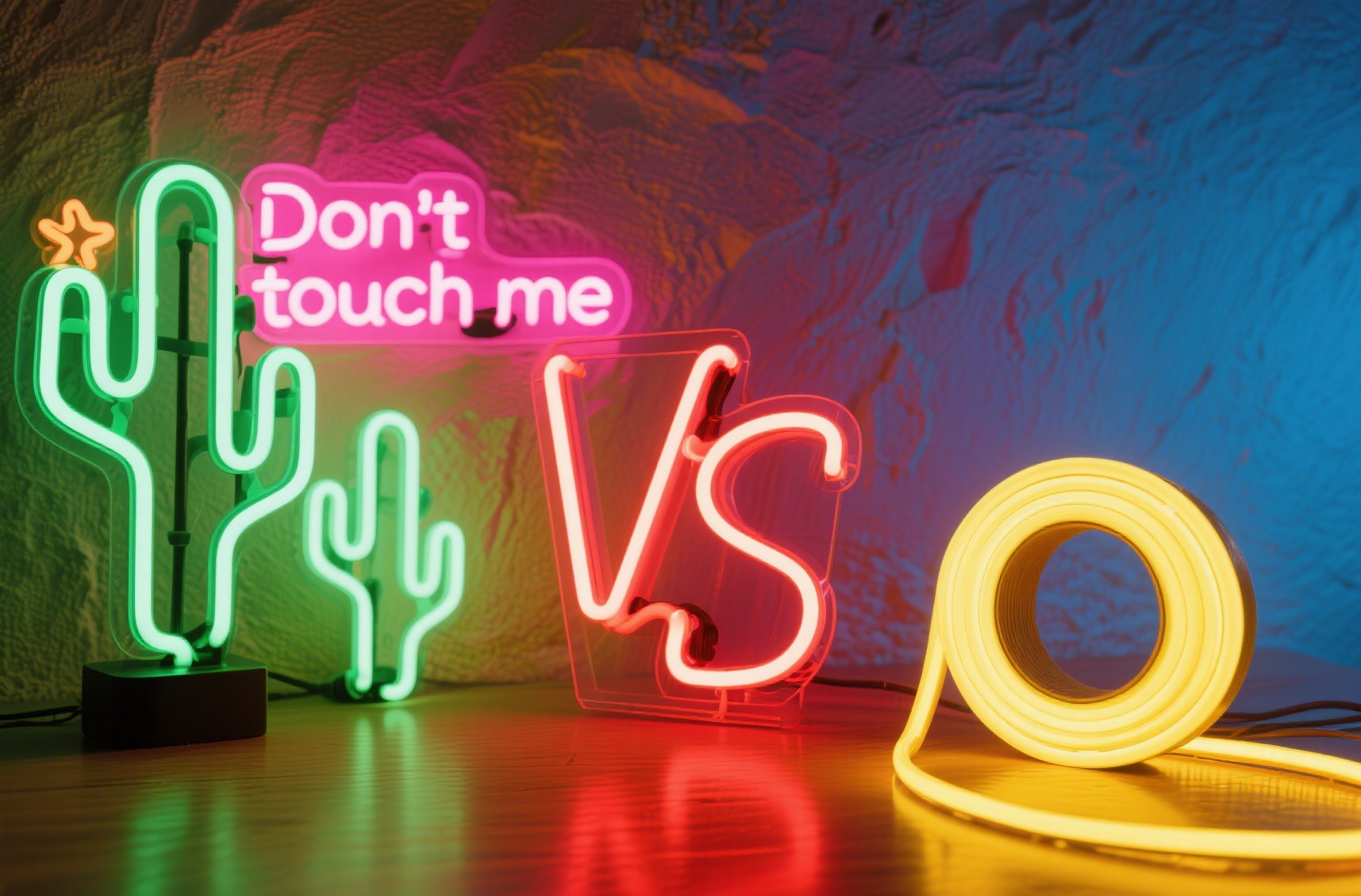 liNeonghts vs. neon Ltrips: ED sA closer look at the differences
  Goodchip Overall Layout in UV LED Market
 - New Upgrading to Eyelove Healthy Lighting LED!
- Goodchip Publishing High Light Efficiency Plant Lighting LED
- Life Of LED Packaging March.
 injection led modules.
 - The latest trends in the LED industry